

About Us
With friendly and specially trained staff, modern dispatch technology, and environmentally friendly vehicles, we offer our passengers and customers optimal taxi dispatch and transportation.
About Taxi 40100
Successfully operating for over 60 years, Taxi 40100, with the most extensive and longest experience, dispatches fleets in Vienna (over 1,700 vehicles), Linz (Taxi 2244), Wels, Villach, Eisenstadt, and many other communities.
Taxis can be ordered via phone, taxi app, website, and through the booking portal. All vehicles accept cashless payments (debit card, credit card, company card, vouchers, PayPal, GooglePay, ApplePay, NFC) as well as cash.
GREEN is IN
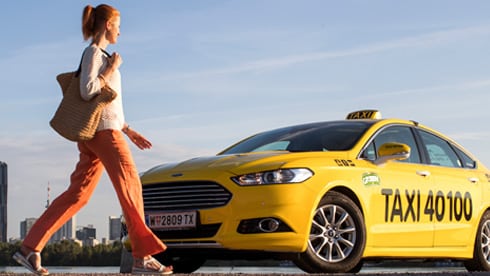
Taxi 40100: “Green” on the go, without surcharge
As Austria’s leading taxi dispatch center, we take our responsibility not only towards our customers, partners, and employees but also towards the environment very seriously.
Already around half of the Taxi 40100 fleet consists of hybrid or electric taxis – and the trend is rising. Sustainable use of our planet’s resources concerns us all, which is why Taxi 40100 has decided to implement important measures for climate protection.

Our mission statement stands for responsibility, progress, safety, and satisfied passengers.
Taxi driver training
At our own taxi driver training school, we provide targeted preparation for the exam, because every high-quality profession requires equally high-quality training. All information about the taxi school – Taxi40100
Waiting times
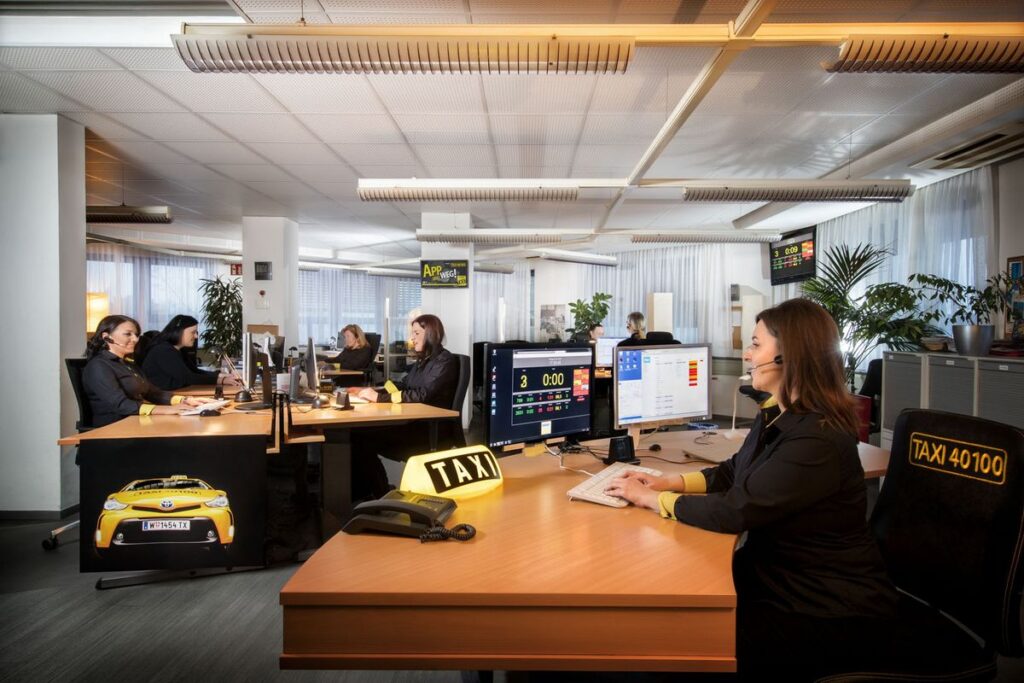
Whether by phone, taxi app, or online – every order is routed via GPS along the shortest and fastest route, which reduces empty-mileage and helps protect the environment. 98% of all calls are answered within 15 seconds, and over 90% of our customers receive their taxi within 5 minutes.
Mystery shopping
The quality of our vehicles is continuously monitored – only vehicles in impeccable condition are added to our fleet. As part of periodic mystery shopping projects, anonymous passengers evaluate Vienna taxis on criteria such as cleanliness, courtesy, and local knowledge.
Customized corporate support
Our trained field staff provide companies with customized solutions – ranging from billing for taxi rides, airport transfers, and courier services to event planning and transportation coordination for conferences.
Taxi School
Taxi 40100 is committed to providing professional radio training. Its own state-of-the-art taxi school also offers a wide range of continuing education courses for current taxi drivers.
Taxi Shop
At our in-house Taxi Shop, Taxi 40100 drivers can purchase merchandise such as receipt books, car accessories, polo shirts, and jackets. The shop is also open to drivers from other dispatch services and our customers.
The Management
2024
Our callbot “Calista” is a hybrid entity and is also available as a chatbot on our homepage. Questions about our services, offers, and innovations can also be answered by “Calista”. Of course, customers can always contact the central office staff by phone or email. Taxi 40100 passed TÜV certification EN ISO 14001 in July 2024. This certification is only granted to companies that meet TÜV standards in environmental management. Furthermore, in July 2024, 75% of the Taxi 40100 fleet was “green” – meaning hybrid or e-taxis – for the first time. In comparison: at the end of 2022, it was only 62%.
2023
The “Vienna eTaxi” project 2.0 was launched in Vienna. Taxi 40100 has been and continues to be a proud cooperation partner since the project’s inception.
2022
Transparent and sustainable operations are key pillars at Taxi 40100. Therefore, the company has been publishing environmental and social sustainability reports since 2022.
2021
At the beginning of the year, the Occasional Transport Act came into force, and since March 2021, there has also been a price band of +/- 20 percent on the fare. Customers who provide their destination address when ordering by phone or app benefit from a more favorable fixed price. Despite the ongoing Corona crisis, a lack of tourists, and fewer passengers, Taxi 40100 was able to maintain its vehicle count almost entirely.
2020
The COVID-19 pandemic hit our industry hard. One of the first measures taken was to equip all call center employees with laptops and headsets. Since then, the majority of call center employees have been working from home. When customers order a car by phone, it is very likely that the call center agent is answering the call from their own living room.
We also moved quickly to protect both customers and taxi drivers: Since early April 2020 – even before the government made masks mandatory – our drivers have been wearing face masks. Just a few days later, Taxi 40100 introduced its new “Safe Taxi” service – taxis equipped with protective partitions. Since then, customers have been able to order a car with a protective partition by phone or via the app. Taxi 40100 played a pioneering role in this regard – after all, we were the first dispatch center in Vienna to provide cars equipped with partition walls.
In 2020, there was also a round anniversary: The Taxi 40100 APP celebrated its 10th birthday.
2019
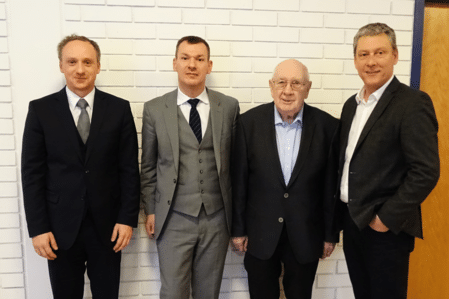
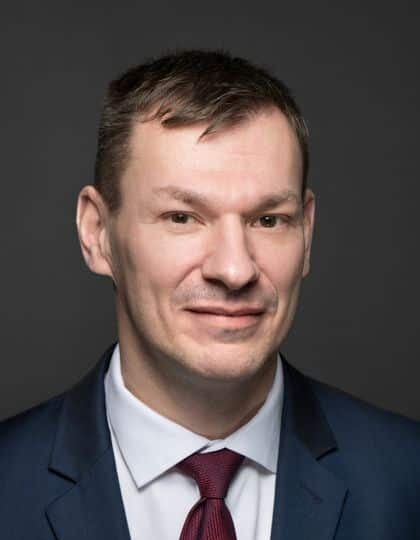
At the General Assembly on January 23, 2019, Mr. KommR Leo Müllner officially announced his resignation as managing director, thus ending his active time with the company after almost 50 years. Mr. Mag. Andreas Hödl was appointed as the new, third managing director on January 24, 2019. Together with Mag. Christian Holzhauser and Manfred Schmid, the 37-year-old lawyer will lead the company.
Mr. Leo Müllner was then elected to the advisory board by the shareholders. Unfortunately, the company could only briefly benefit from Leo Müllner’s profound knowledge and professional expertise: On Wednesday, September 4, 2019, Leo Müllner, who had been the company’s “engine” for decades, passed away at the age of 78.
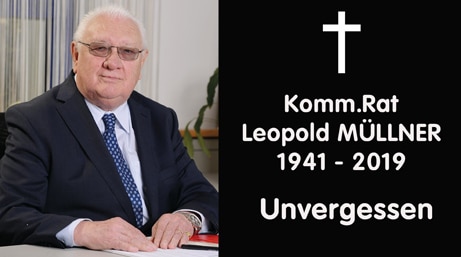
He made Taxi 40100 what it is today: In 1971, he took over the management of the central office. Within three years, he managed to double the number of vehicles and triple the order volume. When the company faced severe economic difficulties in 1982 and the tax office’s letter with a seizure date was already on his desk, he did what he always did – he fought like a lion for the company and the taxi industry and was able to avert the impending downfall. Under the leadership of Komm.Rat Müllner, data radio was introduced, the current central office in Pfarrgasse was purchased, WIHUP was acquired, and the Taxi APP was launched in 2010. Furthermore, Leopold Müllner was instrumental in founding the new taxi school in Pfarrgasse, introducing the PINPad, and creating uniform clothing at Taxi 40100.
“Leo” was a fighter through and through and will always be remembered.
2018
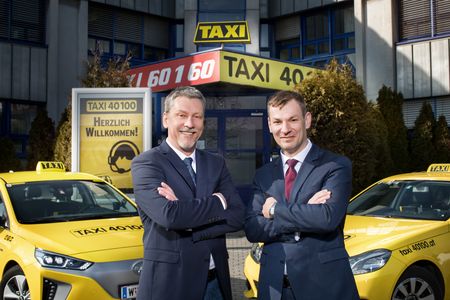
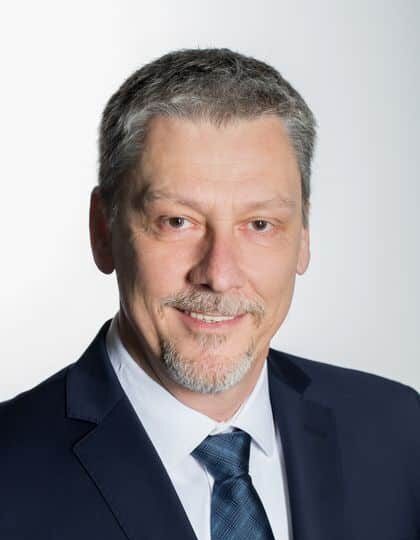
In February, the long-serving radio manager, Mr. Manfred Schmid, is appointed as the third managing director and leads the company together with managing directors Mag. Christian Holzhauser and KommR Leopold Müllner.
Mr. Manfred Schmid (left) and Mr. Mag. Christian Holzhauser
2017
The COVID-19 pandemic hit our industry hard. One of the first measures taken was to equip all call center employees with laptops and headsets. Since then, the majority of call center employees have been working from home. When customers order a car by phone, it is very likely that the call center agent is answering the call from their own living room. When customers order a car by phone, it is very likely that the call center agent is answering the call from their own living room.
We also moved quickly to protect both customers and taxi drivers: Since early April 2020 – even before the government made masks mandatory – our drivers have been wearing face masks. Just a few days later, Taxi 40100 introduced its new “Safe Taxi” service – taxis equipped with protective partitions. Since then, customers have been able to order a car with a protective partition by phone or via the app. Taxi 40100 played a pioneering role in this regard – after all, we were the first dispatch center in Vienna to provide cars equipped with partition walls.
In 2020, there was also a round anniversary: The Taxi 40100 APP celebrated its 10th birthday.
2016

At the beginning of the year, the car rental limousine service ttc GmbH was acquired. Taxi and rental car operators are also affected by the introduction of the legal obligation for cash registers and receipt issuance.
With the fms cash register module, Taxi 40 100 offers its partners the optimal tool from the beginning of the year to fulfill the cash receipt issuance and cash register obligation. The fms Driver-App, which is a mobile addition to the data radio system in the vehicle and has been available since mid-year, is very popular with affiliated entrepreneurs and their drivers.
In April, the “Vienna eTaxi” project starts, which supports Viennese entrepreneurs in switching to a fully electric taxi vehicle. Customers can also order an environmentally friendly “eTaxi” from Taxi 40 100.
In autumn, the fleet will be equipped with the PINPad, a terminal where customers can enter their PIN code for cashless payments with credit or debit cards (instead of signing as before).
On October 28, Taxi 40 100 honored the best in the industry with a “Taxi Award” for the first time. A total of nine personalities were honored with an award, a specially designed glass trophy.

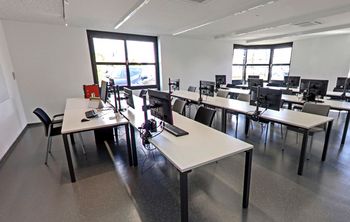
After several months of renovation, the Taxi 40 100 taxi school moved to the completely redesigned building at Pfarrgasse 56, 1230 Vienna, by the end of the year.
2015
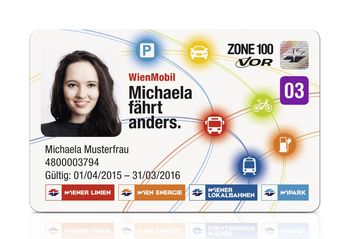
Since March 2015, a cooperation with Wiener Linien allows owners of the new “WienMobil-Karte” to pay for their taxi rides in a 40 100 taxi cashless. This card is an upgraded annual public transport ticket, costing 377 instead of 365 Euros, and is available in the Wiener Linien online shop.
The additional offer aims to make it easier to combine and pay for various transport services without complications.
Farewell, company radio: on October 15, 2015, Taxi 40 100 – after more than five decades – discontinued its analog company radio. Since then, ride dispatch has only been carried out via the well-developed, fast radio network of two mobile network operators. For this purpose, the analog radio systems in all 40 100 fleet taxis were converted to modern HUB technology, based on GPRS/3G.
2014
2013
Five decades ago – exactly on March 4, 1963 – the taxi cooperative V.Ö.T., today Taxi 40 100, began operating its radio dispatch center in Vienna. During this period, Taxi 40 100 has developed into Austria’s largest dispatch company with a taxi fleet of currently 1,800 vehicles.
Completely unexpectedly, Prok. Peter Leopold dies in November 2013 at the age of 55. For over 20 years, Mr. Peter Leopold managed our branch in Linz, Taxi 2244. With him, we lost a dedicated, loyal colleague and a good friend.
2012
By resolution of the General Assembly on January 20, 2012, a sister merger of “WIHUP Taxiservice GmbH” with the company “CC Taxicenter GmbH”, which has existed since 1995, took place in accordance with § 96 GmbHG.
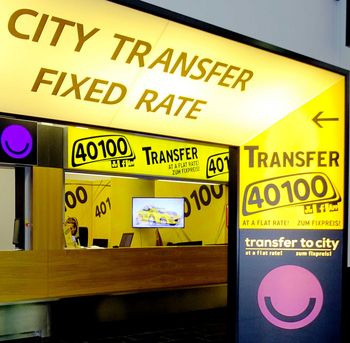
Since the opening (June 5, 2012) of the new Check-in 3 terminal (better known as “Skylink”) at Vienna-Schwechat Airport, we now offer even more service to customers with our own transfer counter. Our 40 100 transfer counter is located in the new arrivals area of Check-in 3, where air travelers can immediately order or pre-book their ride in a Taxi 40 100 and 60 1 60 at a fixed price from our counter staff.
2010
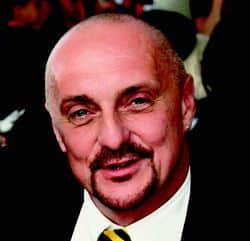

The company “Taxi 40 100 Taxifunkzentrale GmbH” celebrates its 75th anniversary. On February 1, 1935, the “Erwerbs- und Wirtschaftsgenossenschaft für das Kraftfahrwesen registrierte Genossenschaft mit beschränkter Haftung” (Commercial and Economic Cooperative for Motor Vehicles registered cooperative with limited liability) was founded to enable its members from the transport and motor vehicle industry to receive benefits in financing, purchasing vehicles, spare parts, etc. Today, one is miles away from this original idea – in a positive sense! The former cooperative has transformed into a modern corporation and is now a company active throughout Europe, offering a diverse range of services. On one hand, there is the service for its partners, the taxi operators and drivers, and on the other hand, the customer-oriented services for passengers.
The early death of Managing Director Gerhard Pfister († 57) in August overshadows all events. The two managing directors KommR. Leo Müllner and Mag. Christian Holzhauser take over his responsibilities.
In October, the company offers a new, modern service: with the free iPhone application “Taxi 40 100 App”, a taxi can be ordered quickly and easily. With a simple tap, iPhone owners have access to 1600 Viennese taxis from the 40 100 and 60 1 60 taxi fleets.
A few weeks later, this service is also available to Linz customers with the free “Taxi 2244 App”. Both taxi apps are available for free in the Apple AppStore and via links on the homepages of Taxi 40 100 and Linzer Taxi 2244.
2009
In February, our group of companies receives a simpler structure: The subsidiaries “Vienna Taxiservice GmbH” and “cabcharge Vermittlung von Inkassofahrten GmbH” are merged with “Taxi Cash Organisation und Abrechnung v. Taxifahrten GmbH”. The company name of Taxi Cash GmbH was changed to “CC Taxicenter GmbH”.



2008
In February, our group of companies receives a simpler structure: The subsidiaries “Vienna Taxiservice GmbH” and “cabcharge Vermittlung von Inkassofahrten GmbH” are merged with “Taxi Cash Organisation und Abrechnung v. Taxifahrten GmbH”. The company name of Taxi Cash GmbH was changed to “CC Taxicenter GmbH”.
2007
Taxi 40 100 merges with Taxi 60 1 60. On May 15, 2007, Taxi 40 100 Taxifunkzentrale GmbH acquires 100% of the shares in WIHUP Taxiservice GmbH. This marked the successful conclusion of many months of intensive negotiations regarding how and in what form these two robust companies should be guided into a forward-looking strategic partnership.
Both companies will remain independent in the market. The benefits of the deal are primarily expected to arise from the formation and utilization of synergies. This is also, and above all, for the benefit of passengers and in the interest of the taxi operators and chauffeurs affiliated with both dispatch centers. For the two 40 100 managing directors Gerhard Pfister and Mag. Christian Holzhauser, the 100% acquisition of the 60 1 60 shares also means a 100% increase in their scope of duties and responsibilities. Together with KommR Leopold Müllner, they form the management of WIHUP Taxiservice GmbH.
2005 - 2006
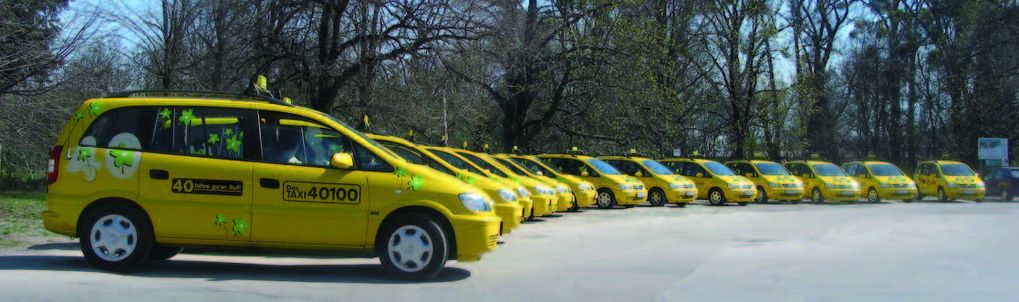
Fleet-wide conversion to the latest technology. The new control unit has an integrated card reader. All card payments are processed online. This makes comprehensive processing of debit cards possible for the first time. The fleet is located via GPS at all times. The radio infrastructure has been expanded to 9 channels.

2005
Completely unexpectedly, Franz Necas dies at 59 during a business trip. As a long-standing radio manager and board member, he contributed to the reconstruction and repositioning of 40 100 as the market-leading Viennese taxi radio dispatch service, which he also headed as managing director alongside Leo Müllner since 1999.
2003
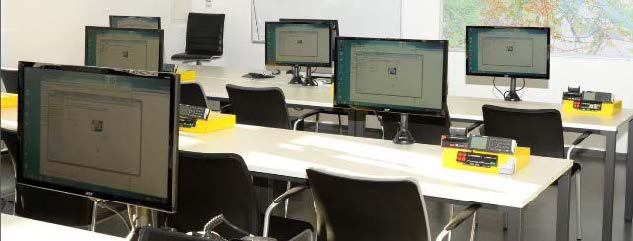
Objective testing at Taxi 40100. All drivers are tested on a computer using a multiple-choice test, similar to the driving license exam.
2001 - 2002
Data radio devices are up to date with corresponding software. Expansion to the 6th channel.
2000
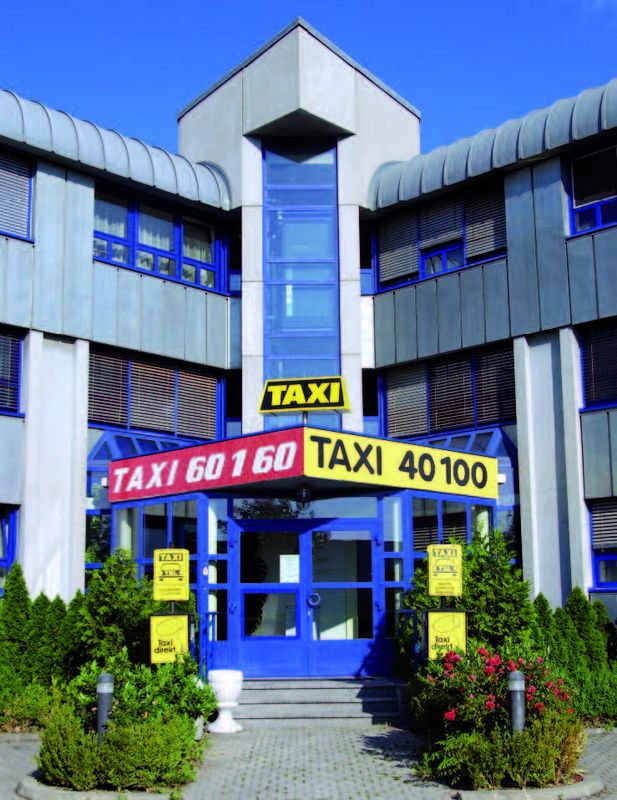
Purchase of the property in Vienna 23, Pfarrgasse, and relocation to the current company headquarters.
Purchase of the 81 400 taxi radio dispatch center.
1999
The V.Ö.T., as 100% shareholder, founds “Taxi 40 100 Taxifunkzentrale GmbH”, which is to replace the old cooperative. Contribution of the operations of the taxi radio dispatch center.
1994
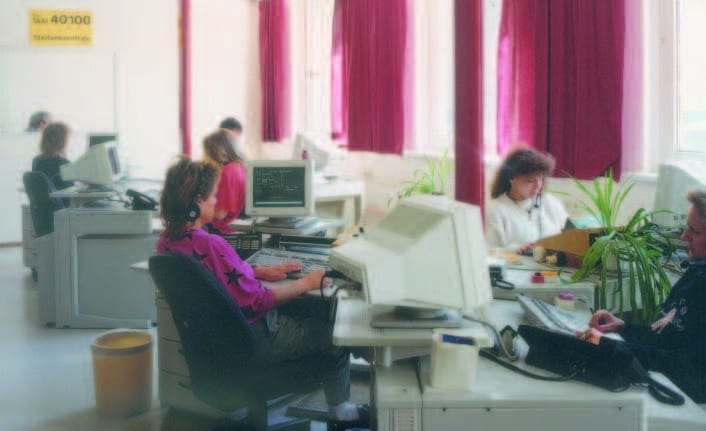
…the last hour of voice radio strikes, and the mixed operation of data and voice radio maintained until then is discontinued. From April, radio taxis will only be dispatched via data radio. At the same time, forward-looking quality-enhancing measures are taken: the introduction of an “admission committee” for new radio participants is one of them.
1993 - 1994
After thorough review and exploration, the decision is made for the new data radio system, which is introduced with an ID card for the driver. After 15 years, the central office in Bennogasse is literally bursting at the seams. The relocation to Ottakringer Str. 54 in the 17th district brings not only modern office premises but also amenities for drivers and entrepreneurs such as a lecture hall, an underground garage, and much more.
1992
Considerable increase in “cashless rides” (taxi checks and social security).
An advertising campaign together with the professional group and other radio dispatch centers aims to appeal to passengers. At 40 100, things are democratic. Instead of simply making decisions over the heads of the entrepreneurs, their consent for the introduction of data radio is obtained through a ballot among taxi operators.
1991
With a 50 percent stake in the acquisition of the 91011 radio taxi center, VÖT secures important market shares. The commissioning of a tape recording system, a so-called “Doku”, enables the complete recording of all calls and customer conversations. This is not only helpful and fair as evidence for finding the truth in case of a complaint – the Doku has also repeatedly proven its worth as a successful investigative tool in crime fighting.
1990
The development of telecommunications is also in full swing, and a conversion from the well-established number 43 69 to a five-digit phone number becomes unavoidable.
From a list of many possible combinations, the number 40 100 is identified as the best possible phone number in a broad market survey and introduced to the market in a large-scale advertising campaign.
1987
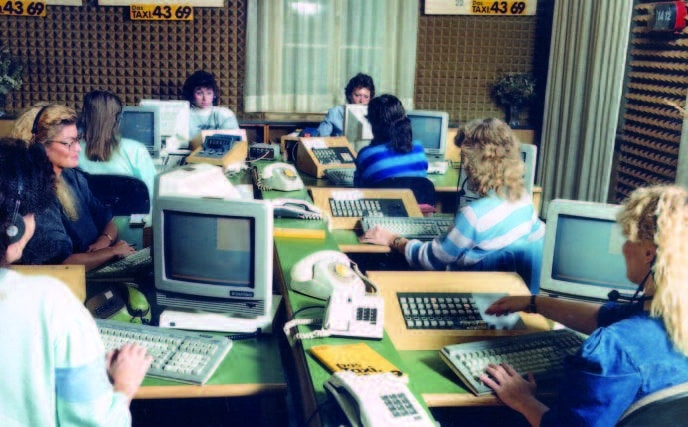
The end of paperwork has arrived. The introduction of EDP in order processing is unstoppable and enables the conversion to the “First Car” system, which can finally effectively counteract stressful chases for orders without loss of time for passengers.
1979 - 1980
1973 - 1974
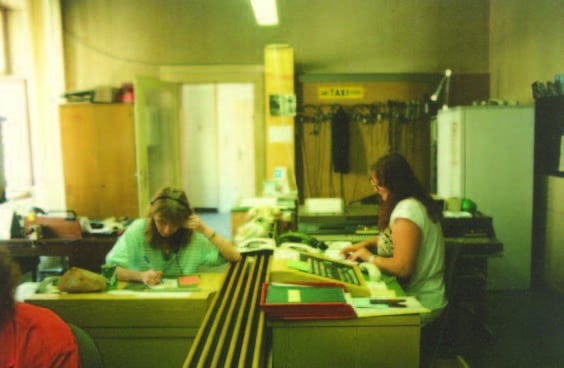
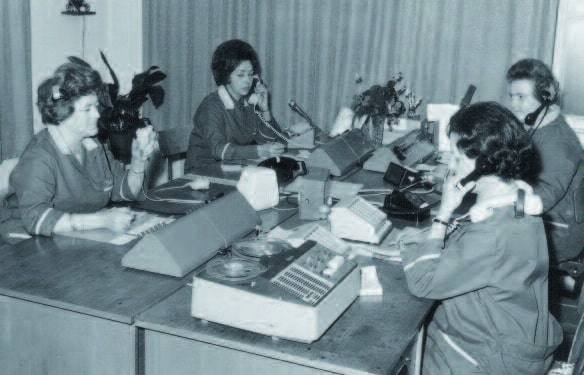
600 radio taxis are now reachable via 4369. To efficiently handle orders – especially during peak times – sophisticated logistics are already required at the central office. Calls are taken at 6 telephone stations and forwarded via conveyor belt to the radio stations, where the famous “colleague” sends the order over the airwaves.
In the radio taxi itself, every passenger can witness this not-so-stress-free activity, accompanied by countless squawking “Düdeldüs”. The taxi driver who is quickest on the “button” receives the order.
The V.Ö.T. taxi radio center and the radio devices in the taxis are expanded to 3-channel operation and transponders.
1971
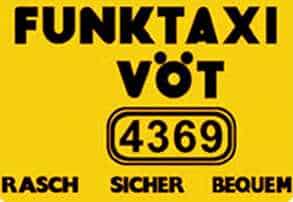
Among the most important success criteria for a taxi radio center, in addition to the quality of drivers and vehicles, is a memorable phone number.
This year, the V.Ö.T. becomes the first Viennese taxi radio center to receive an attractive short dial number.
1969
Relocation to the 8th district of Vienna, to Bennogasse 29. Here, radio ride dispatch is already carried out via ten telephone lines, and the VÖT radio center receives a new number for the first time: 43-15-21.
Competitors Norman and Wihup also begin operating taxi radio centers this year.
1966
The triumph is unstoppable: More than 200 radio cars are connected, and a second radio channel is put into operation.
1964
…approximately 40 radio cars are already connected and can be ordered via the revolutionary radio taxi system.
1963

The V.Ö.T. = Verband Österreichisches Transportgewerbe (Association of Austrian Transport Industry) begins operating a taxi radio center in the premises of the Doctors’ Center in Vienna 1, Helferstorferstr. Initially, two telephone lines and one radio channel are used.
The central office can be reached at telephone number 63-02-08.